




Division 3 Nostalgic F1 /Indy Cars
Yet another Division III class of race car, the nostalgic F1 / Indy car. These are super fast cars that handle extremely well. They are even a bit faster than their Can-Am counterparts.





This page was last updated: October 26, 2006
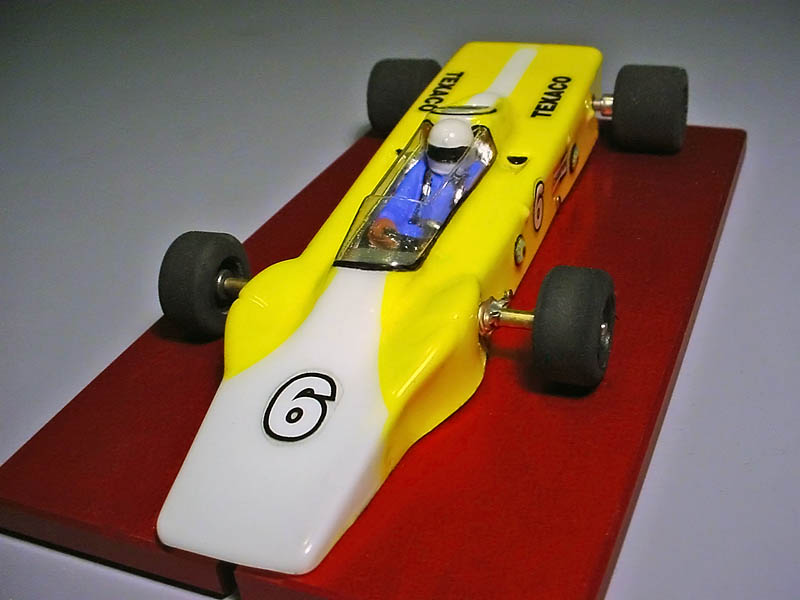
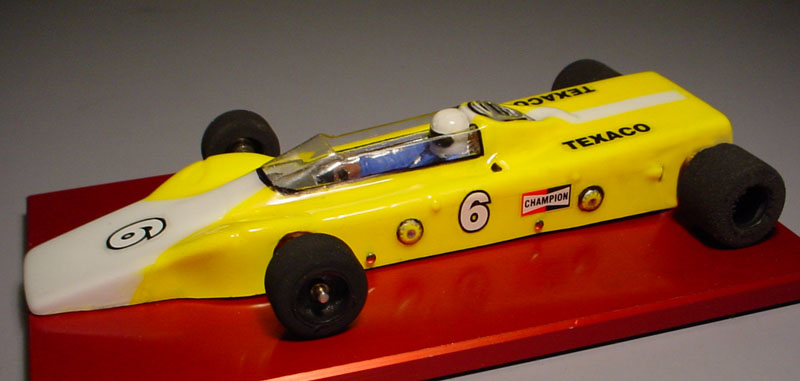
The chassis is in an inline configuration with a maximun width of 1 3/8 inches.Front tires are .750" minumum diameter and the rears are 13/16" minimum, just like on the Can-Am cars. The track width is the widest of all of the Div 3 cars yet at 3.25 ". Clearance under the rear axle is .050" and the front can be as low as you want as long as the front tires are firmly contacting the track. Other than that, all of the Can-Am chassis guidlines apply. The bodies are made by Lancer and are of the F1 /Indy handling variety. The turbine Lotus shown above was pulled by Chris at Buena Park Raceway and it also legal. First we'll start with they way that I designed my chassis......
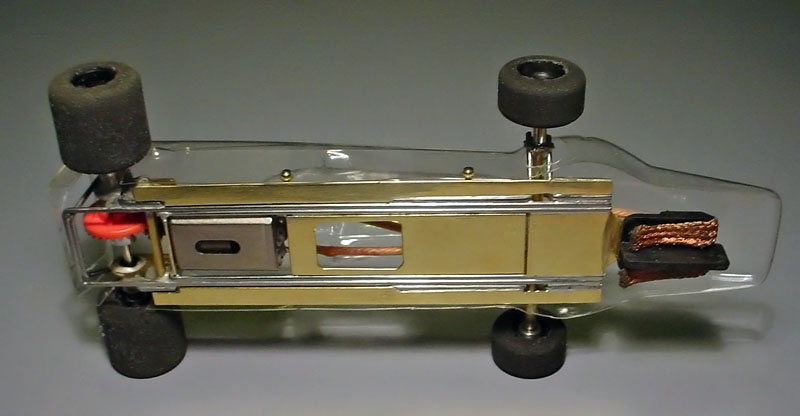
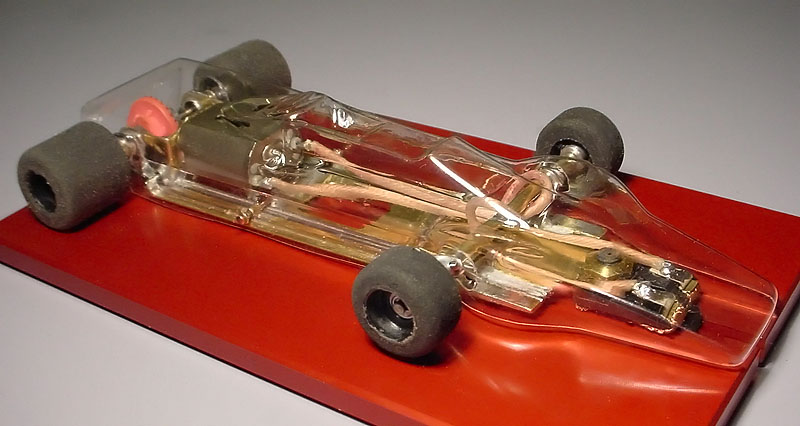
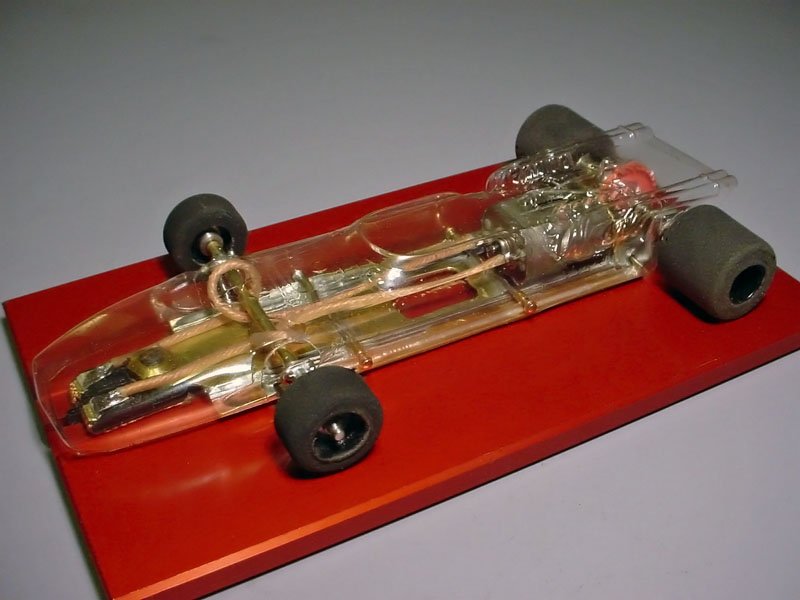
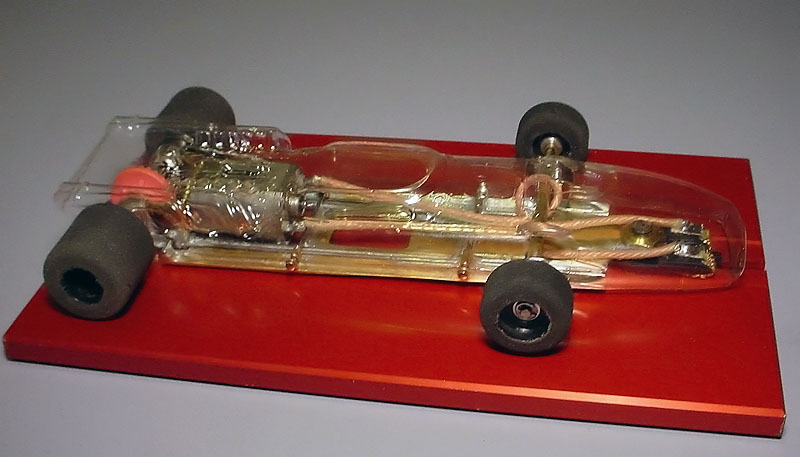
Since my torsion Can-Am and Stockcar chassis' have been working so well, I decided to incorporate the same features into my F1 chassis. But instead of having outer floating pans, this chassis has an INNER floating pan that is connected to the body mounts, allowing the body to "rattle" and to minimize tire chatter for resonances produced by the music wire main frame. This is my fastest Div III car yet and it handles extremely well.
The chassis is a dual rail (.055") piano wire rear suspension chassis with a floating center pan (ala Dennis Samson style). The side rails are .032" with an "L" brace running almost the entire length in the center of them forming an "T" beam making them extremely rigid. They are soldered solid to the chassis up front . The rear suspension has an .047" music wire connecting the rear of both of the pans running thru a 3/32" tube near the front of the motor box. The floating plate was lightened and just rattles with .050" stainless pin tubing running thru four tiny 3/32" tubes soldered onto the side pans. The floating pan is made from .032" but is doubled in thickness to .064" near the guide tongue. It weighs 7.5 grams (alittle more than the weight of the body and driver). Total weight of the chassis is 44.6 grams and the RTR car w/o paint but with the body mounted weighs 95 grams (less driver). I have no idea of what other people's F1's weigh, so i basically made this chassis based on one of my best handling Can-Am designs. Personally, I think that the trick to using piano wire in a frame (as opposed to brass or bronze rod) is to give it a little suspension instead of allowing the stiffness of the piano wire to spring itself.
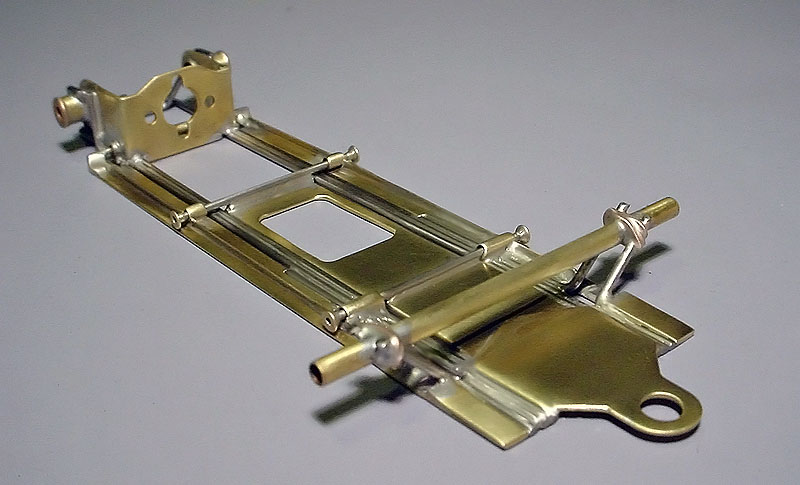
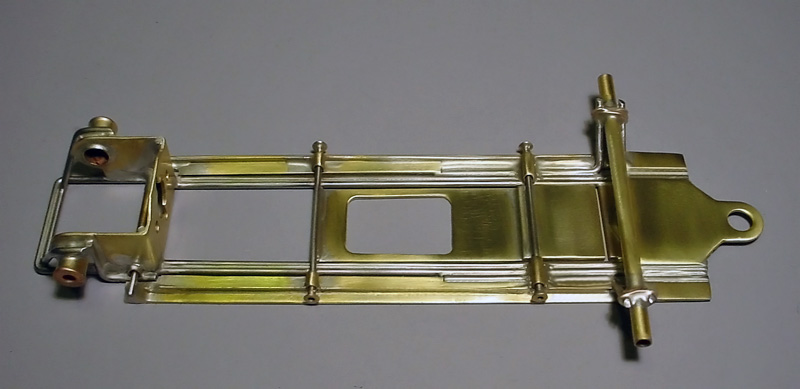
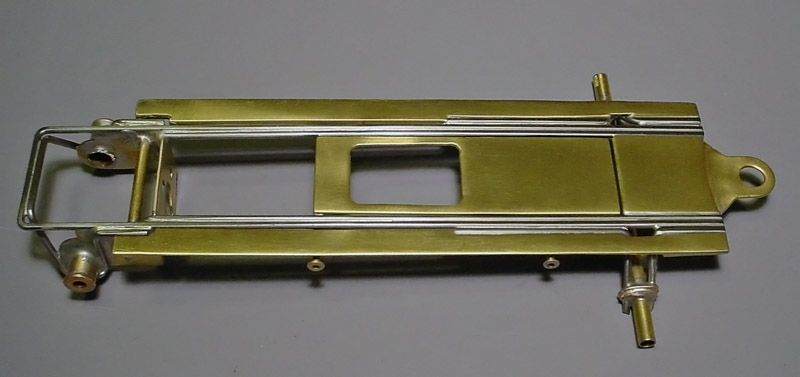
Below are a few pics of the chassis with all of the components mounted:
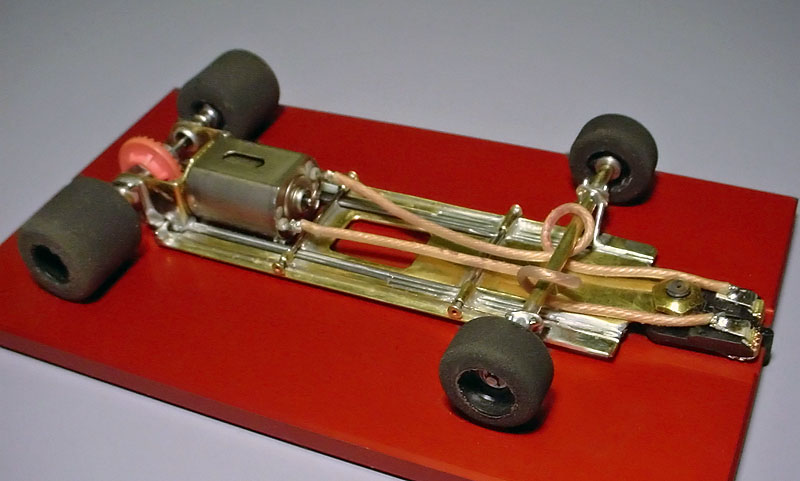
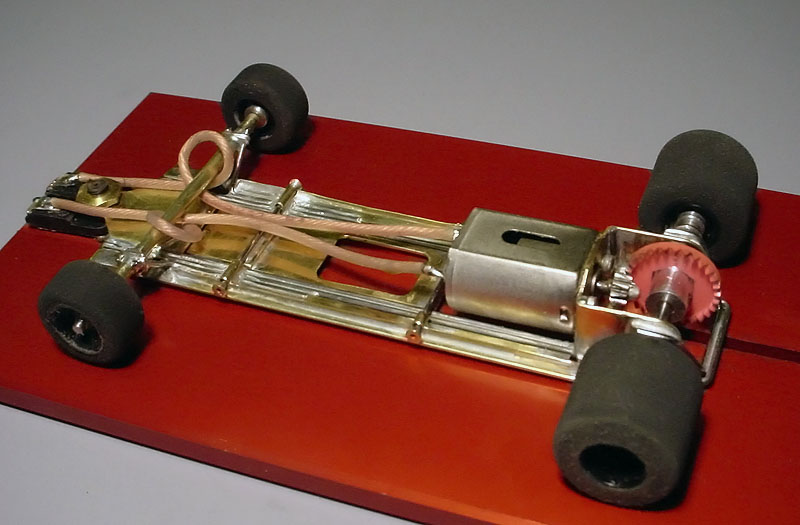
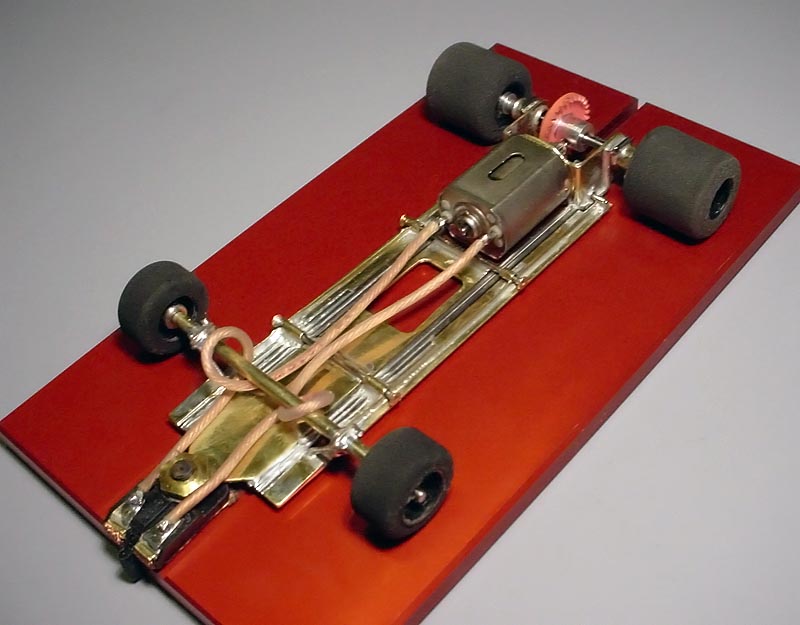
Here's a few with two different bodies before paint:
I used a 9 tooth GT-1 angled pinion with a sleeved Parma 27T crown gear to give it a 3:1 ratio. I tried a larger spur but the car was a bit too twitchy since it only weighs 97.4 grams RTR. The taller gears smoothed out the performance to make it feel more similar to a Can-Am car, yet it still has a much quicker response time to the throttle and brakes.
Here she is ready to race:
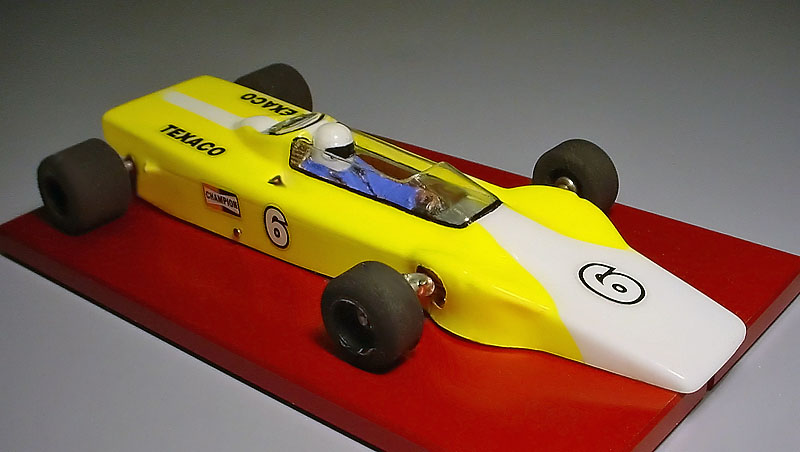
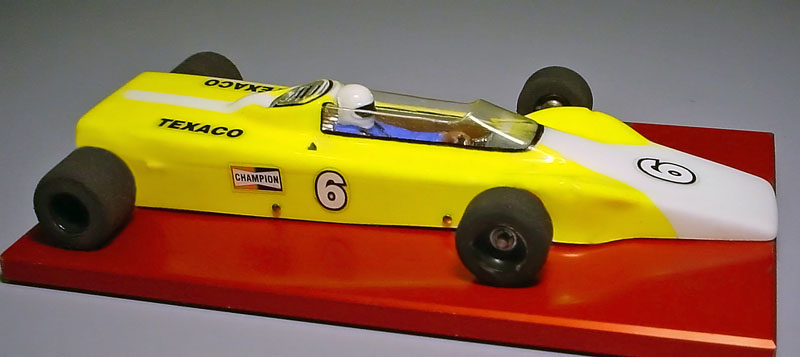
Once again I'd like to thank Paul Sterret and Mike Steube for re-developing this nostalgic form of racing. I couldn't be happier with the results!
regards,
johnk

